Webb Telescope Discovers Sulfur Around Four Distant Planets
Scientists using the James Webb Space Telescope found hydrogen sulfide around four gas giant planets 133 light-years away, solving mysteries about how massive planets form. The breakthrough technique will help astronomers search for life on distant worlds.
Scientists just confirmed that four mysterious giant objects orbiting a distant star are actually planets, not something else entirely, and the discovery is opening new doors in the search for life beyond Earth.
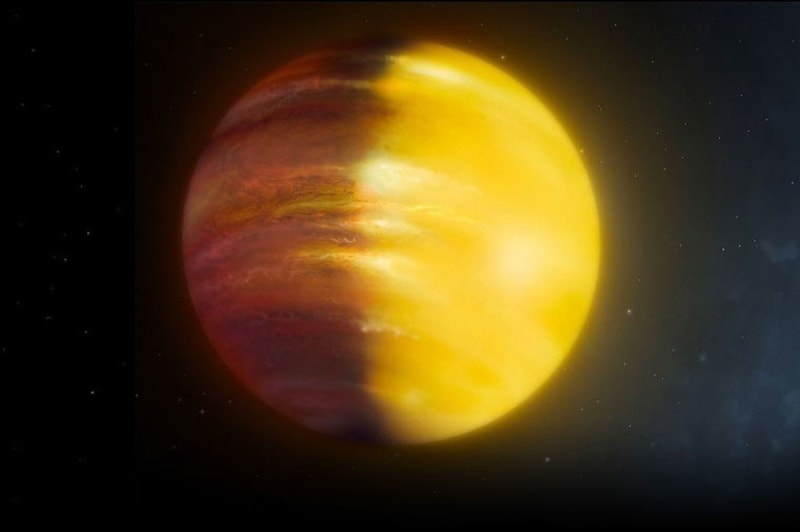
Researchers from UCLA and UC San Diego detected hydrogen sulfide around four massive gas giants orbiting a star called HR 8799, located 133 light-years from Earth. It's the first time anyone has spotted this smelly compound around planets outside our solar system.
The four giants dwarf anything in our solar system. The smallest weighs five times more than Jupiter, while the largest tips the scales at ten times Jupiter's mass.
For years, scientists weren't sure if these objects were planets or brown dwarfs, which sit somewhere between planets and stars. Objects heavier than 13 Jupiter masses typically ignite fusion reactions, transforming into brown dwarfs instead of remaining planets.
The sulfur discovery changed everything. When researchers compared the sulfur, carbon, and oxygen ratios in these planets to their host star, they found something unexpected. The planets had much higher ratios of heavy elements than the star itself.
This uniform enrichment across multiple elements suggests these objects formed like planets, not brown dwarfs. Even more exciting, scientists already see this same pattern on Jupiter, hinting at something universal about how gas giants are born.
The Ripple Effect goes far beyond understanding these four distant worlds. The technique researchers developed to separate the planets' faint light from their blindingly bright host star represents a major leap forward for exoplanet hunting.
Right now, these four giants orbit too far from their star to support life as we know it, and gas giants aren't great candidates for hosting living things anyway. But the same approach will work for studying smaller, rockier planets that might harbor extraterrestrial life.
"Finding an Earth analog is the holy grail for exoplanet search," said UCLA researcher Jerry Xuan. He estimates we're still 20 to 30 years away from capturing the first spectrum of a truly Earth-like planet and searching its atmosphere for oxygen, ozone, and other signs of life.
The Webb telescope keeps proving it can see things no other instrument can detect, peering through cosmic distances to reveal the chemical fingerprints of alien worlds.
Based on reporting by Google: James Webb telescope
This story was written by BrightWire based on verified news reports.
Spread the positivity!
Share this good news with someone who needs it