UT Southwestern's Dr. Hobbs Wins Top Heart Science Award
A Dallas researcher who discovered how to dramatically lower bad cholesterol just won one of cardiology's highest honors. Her work has already led to life-saving drugs now used worldwide.
Find uplifting stories about heroes, innovations, and solutions
20 results for "genetic research"

A Dallas researcher who discovered how to dramatically lower bad cholesterol just won one of cardiology's highest honors. Her work has already led to life-saving drugs now used worldwide.

After 20 years and more than 30,000 cloning attempts, Japanese researchers have discovered that mammals can't be cloned indefinitely. The breakthrough reveals crucial insights about DNA preservation that could transform how we protect endangered species.

A biotech company is building a "Trillion Gene Atlas" to map genetic data from over 100 million species worldwide, potentially accelerating the discovery of life-saving drugs. Unlike controversial AI training data scraped from the internet, this effort shows what happens when communities are paid for contributing to scientific breakthroughs.

Scientists finally cracked the mystery of how Amazon mollies survived for 100,000 years without males, reproducing only through cloning. The discovery could revolutionize how we fight cancer and improve crops.

Australian scientists have developed a revolutionary platform that can analyze over 100 genetic risk factors for multiple sclerosis at once. This breakthrough could lead to personalized treatments for thousands living with the unpredictable disease.
New genetic research reveals that thousands of years ago, modern humans and Neanderthals didn't just share the Earth. They built families together, and those connections still shape who we are today.

Japanese scientists have gene-edited muskmelons to stay fresh for two months, solving a major export problem. The melons can be ripened whenever needed by simply exposing them to ethylene gas.

Scientists discovered that South Africa's Cape leopards are genetically distinct from all other African leopards, having evolved separately for over 20,000 years. Despite being hunted nearly to extinction, these smaller cats are thriving with surprising genetic health.

After a century of trying to restore the once-mighty American chestnut, Virginia Tech researchers can now use DNA to predict which young trees will survive blight, potentially bringing back a forest giant within a generation. The breakthrough means restoration efforts can move years faster than traditional breeding methods.

Researchers discovered a groundbreaking method to monitor Epstein-Barr virus using existing DNA data, opening new paths to understand diseases like multiple sclerosis. The technique transforms ordinary genome databases into powerful tools for fighting chronic illness.

Scientists discovered that cats develop cancer through the same genetic mutations as humans, opening new paths for treatments that could save both pets and people. Nearly 500 cats helped create a "cancer map" that might lead to personalized therapies for families and their felines.

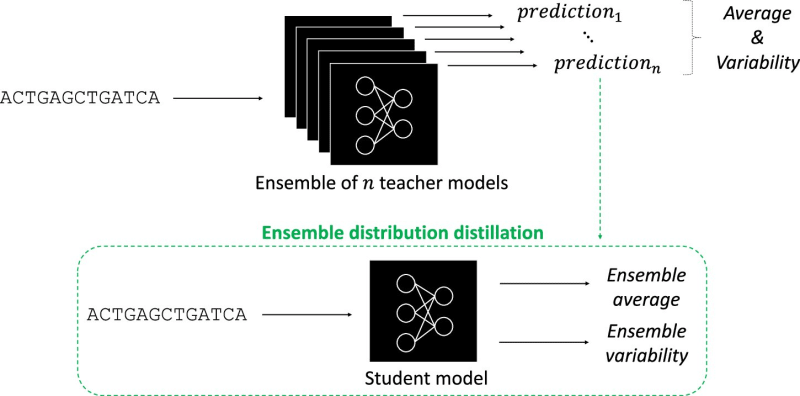
Scientists have created DEGU, an AI tool that makes genetic research 10 times faster and cheaper while delivering more accurate predictions. The breakthrough could accelerate lifesaving medical discoveries by helping researchers avoid expensive dead-end experiments. #

Researchers discovered 200 new genes that increase the risk of aortic stenosis, a heart valve condition affecting 9 million people worldwide with no current treatment. The breakthrough could lead to early screening and the first drugs to slow or stop the disease.

A futuristic vault in Dubai's Museum of the Future will freeze DNA from Earth's most endangered animals, creating a backup plan for life as extinction rates accelerate. The project starts with 100 critically endangered species and will eventually house samples from over 10,000 species.

Scientists at Newcastle and Queen Mary universities have identified genetic markers that could transform psoriasis treatment into truly personalized care. The breakthrough analyzed over 700 patient samples using AI to decode which treatments work best for individual patients.

Researchers have identified the genetic fingerprint of "sleeping" pain neurons that affect 10% of people with chronic nerve pain. This breakthrough opens the door to targeted treatments that could silence overactive pain signals without affecting normal sensation.
Google's new AI can decode mysterious stretches of DNA that control our genes, while surgeons kept a patient breathing for two days without lungs. These breakthroughs could transform how we treat diseases like cancer.

Google DeepMind just opened up its DNA-reading AI to help scientists worldwide crack the code of genetic diseases. Nearly 3,000 researchers are already using it to fight cancer, brain disorders, and infections.

A groundbreaking nine-country African collaboration has sequenced over 1,000 genomes from underrepresented communities, revealing millions of new genetic variants that could revolutionize how doctors predict and treat diseases worldwide. The project corrects a dangerous medical blind spot: most genetic research comes from European populations, making current disease predictions dangerously inaccurate for African patients.

The world's rarest porpoise is down to single digits, but new genetic research reveals something surprising. Scientists say the vaquita can still recover if one critical threat is eliminated now.