Search

Find uplifting stories about heroes, innovations, and solutions

3873 results for "large hadron collider"

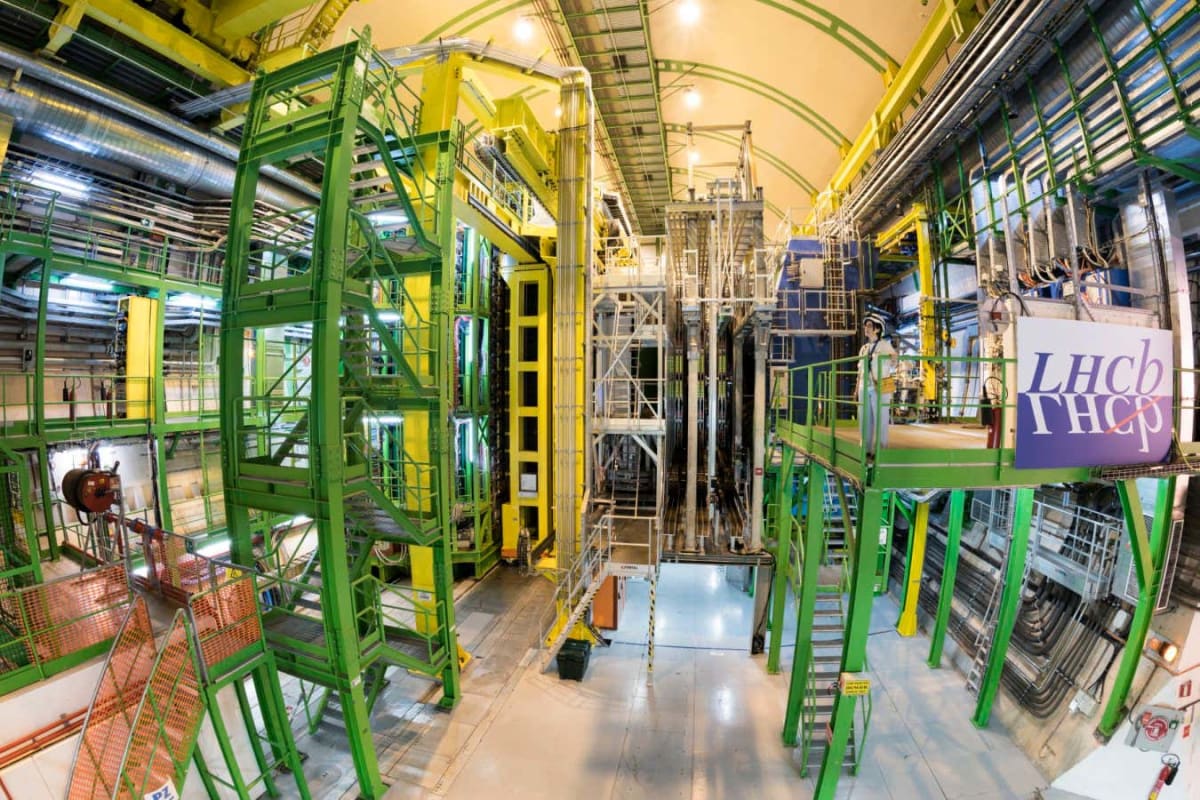
Scientists Find Super-Heavy Proton at Upgraded Cern Collider
InnovationMar 18

Scientists Find Super-Heavy Proton at Upgraded Cern Collider

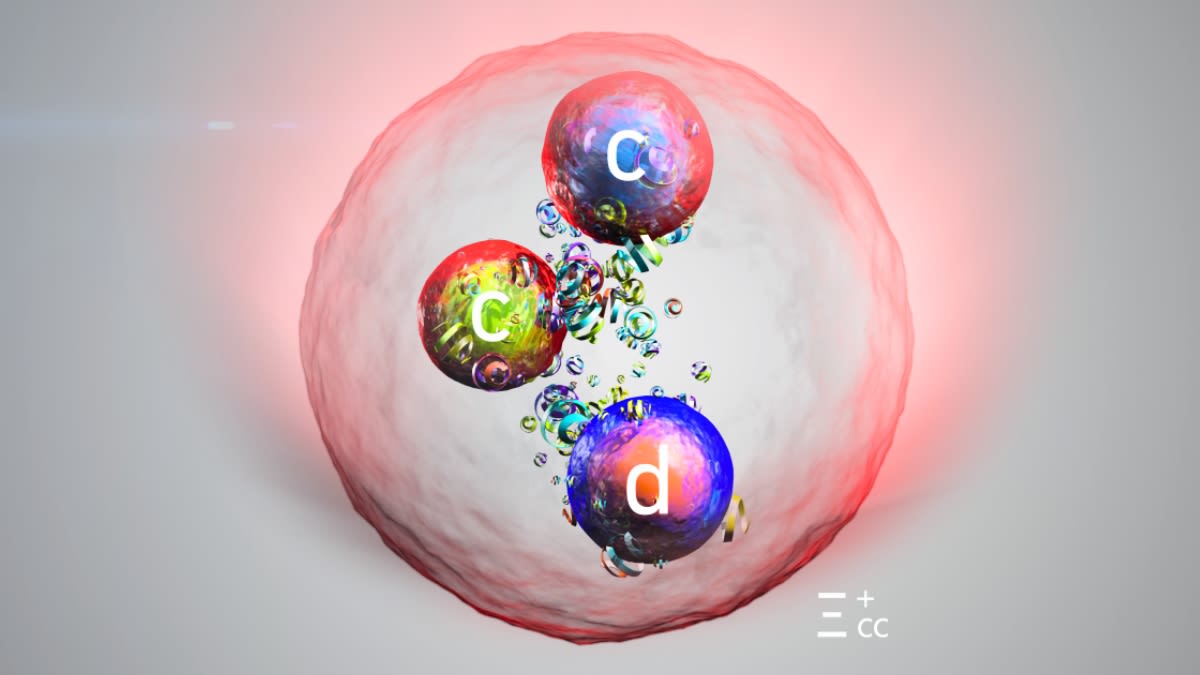
Physicists at Cern's Large Hadron Collider discovered a proton four times heavier than normal, offering new insights into the forces holding atoms together. The breakthrough came after just one year with upgraded detectors that previously couldn't spot the particle in a decade of searching.
Google News - Scientists Discover3 min read
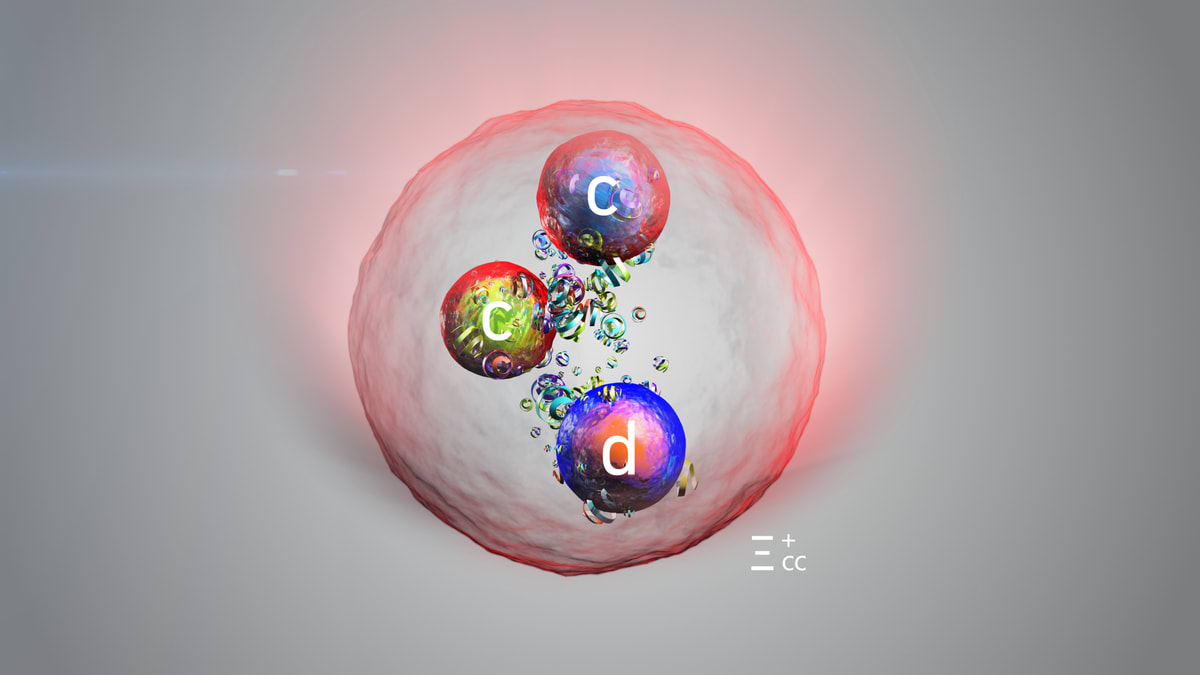
CERN Discovers 80th Particle After Collider Upgrade
InnovationMar 18

CERN Discovers 80th Particle After Collider Upgrade

Scientists at CERN have discovered a new particle four times heavier than a proton, opening fresh insights into how the universe works. The breakthrough marks the first discovery since major upgrades to the world's most powerful particle collider.

Google News - Technology2 min read
CERN Discovers New Particle 4 Times Heavier Than a Proton
InnovationMar 18

CERN Discovers New Particle 4 Times Heavier Than a Proton

Scientists at CERN's Large Hadron Collider just discovered their 80th particle, a groundbreaking baryon that could unlock secrets about the forces holding all matter together. The discovery came after major detector upgrades completed in 2023.

Google News - Technology3 min read
CERN Scientists Find Strong Evidence of New Physics
InnovationJun 2

CERN Scientists Find Strong Evidence of New Physics

Researchers analyzing 650 billion particle decays at CERN's Large Hadron Collider discovered behavior that defies our current understanding of physics. This breakthrough could unlock mysteries like dark matter and reshape science for generations.

Google News - Science3 min read
CERN Discovers Mystery Particle After 20-Year Search
InnovationMar 18

CERN Discovers Mystery Particle After 20-Year Search

Scientists at CERN's Large Hadron Collider just found a particle that solves a puzzle from 2002, proving upgrades to the world's most powerful atom smasher are paying off. The discovery shows we can now detect particles that live for just a fraction of a trillionth of a second.

New Scientist2 min read
Scientists Make Big Step Toward Revolutionary New Collider
InnovationApr 1

Scientists Make Big Step Toward Revolutionary New Collider

A once-fanciful particle collider that seemed impossible to build is now getting serious funding attention. The muon collider could unlock mysteries about our universe that current machines can't solve.

New Scientist3 min read
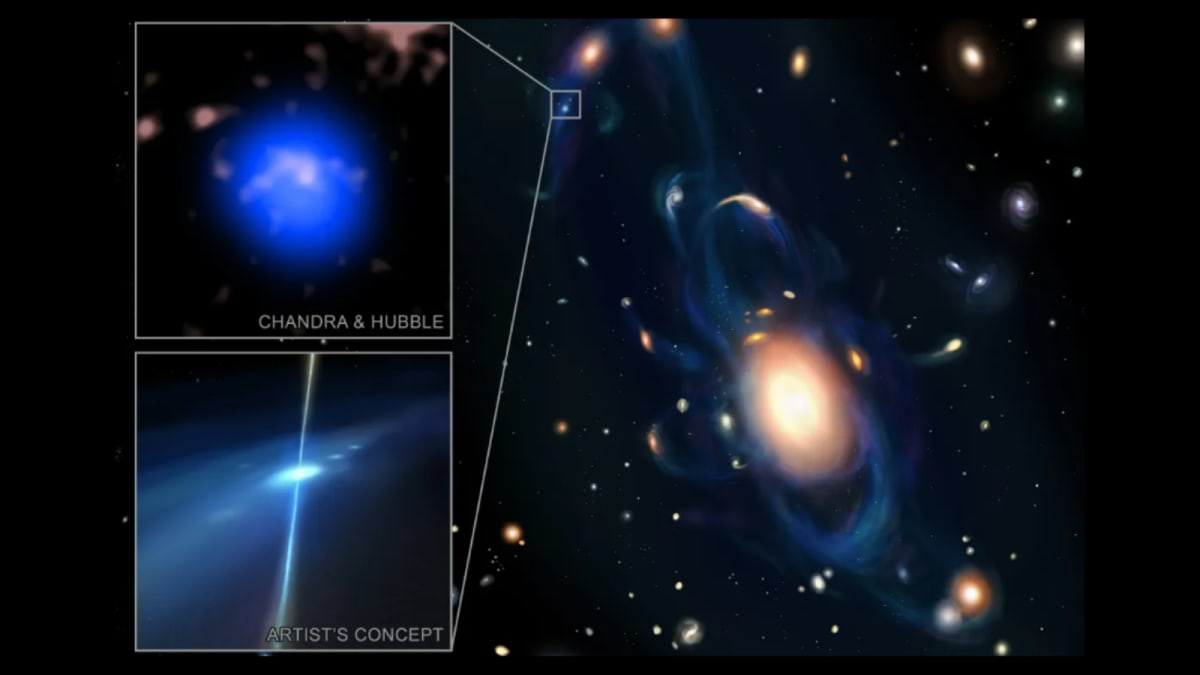
NASA Tracks Gamma-Ray Burst to Colliding Stars in Tiny Galaxy
InnovationMar 14

NASA Tracks Gamma-Ray Burst to Colliding Stars in Tiny Galaxy

Astronomers discovered a powerful gamma-ray burst came from two colliding neutron stars in a dwarf galaxy, solving mysteries about how gold and silver formed in the universe. The finding shows these cosmic explosions can happen in small galaxies, not just large ones.

Space.com2 min read
Scientists Discover Exotic New Particle at Atom Smasher
InnovationMar 18

Scientists Discover Exotic New Particle at Atom Smasher

Physicists at the world's largest particle collider just found a never-before-seen building block of matter that could unlock secrets about the most powerful force in the universe. The discovery marks the 80th new particle found at the facility and is only the second of its kind ever observed.

Scientific American2 min read
Scientists Find First Cracks in 50-Year Physics Theory
InnovationMay 26

Scientists Find First Cracks in 50-Year Physics Theory

Researchers at CERN's Large Hadron Collider discovered particle behavior that defies our fundamental understanding of physics, potentially opening doors to unknown forces and particles. The findings could explain mysteries like dark matter that make up 25% of our universe.

Science Daily3 min read
CERN's Particle Collider Now Heats 6,000 French Homes
Planet WinsJan 31

CERN's Particle Collider Now Heats 6,000 French Homes

The world's most powerful particle accelerator just got a second job: keeping thousands of homes warm. CERN is redirecting waste heat from its massive collider to heat an entire French neighborhood instead of releasing it into the air.

New Atlas2 min read
Large Tortoiseshell Butterfly Returns to UK After 60 Years
Planet WinsMar 9

Large Tortoiseshell Butterfly Returns to UK After 60 Years

A stunning butterfly that vanished from Britain in the 1960s is officially back, with sightings across southern England confirming the species is breeding in the wild again. The large tortoiseshell's comeback brings Britain's native butterfly count to 60 species.

Guardian Environment2 min read
US Particle Collider Closes After 25 Years of Discoveries
InnovationFeb 7

US Particle Collider Closes After 25 Years of Discoveries

America's largest particle collider ended its groundbreaking 25-year run, but scientists are already building something even better in its place. The machine recreated conditions from microseconds after the Big Bang and solved mysteries about the building blocks of matter.

Scientific American2 min read
After 25 Years, U.S. Particle Collider Makes Way for Upgrade
InnovationFeb 12

After 25 Years, U.S. Particle Collider Makes Way for Upgrade

America's only particle collider just closed after recreating the universe's first moments for a quarter century. Its shutdown isn't an ending—it's making room for an even more powerful machine.

Smithsonian2 min read
NASA Finds Colliding Stars Solve Two Cosmic Mysteries
Global NewsMar 10

NASA Finds Colliding Stars Solve Two Cosmic Mysteries

NASA discovered two ultradense neutron stars colliding in a tiny galaxy hidden inside a massive gas stream, solving puzzles about mysterious gamma-ray bursts and how precious metals end up in distant stars. This groundbreaking find shows extreme cosmic events can happen in the smallest places.

NASA3 min read
Scientists Recreate Big Bang Matter in Giant Collider
InnovationApr 9

Scientists Recreate Big Bang Matter in Giant Collider

Scientists at the world's most powerful particle accelerator just got their clearest look yet at the primordial soup that filled the universe moments after its birth. The discovery reveals how the building blocks of everything came together in the first fractions of a second.

Space.com2 min read
Sweden Launches First Large-Scale Hydrogen Valley
Planet WinsJan 26

Sweden Launches First Large-Scale Hydrogen Valley

Sweden is building its first major Hydrogen Valley, a six-year EU-funded project connecting the West Coast to the High Coast with over 40 partners working to produce 4,000 tonnes of green hydrogen by 2030. The initiative positions Sweden as a leader in clean energy while creating a blueprint for Europe's hydrogen future.

Regional: sweden renewable energy (SE)3 min read
Mars May Have Had Ocean as Large as Earth's Arctic
InnovationJan 19

Mars May Have Had Ocean as Large as Earth's Arctic

New evidence suggests Mars once held a massive ocean across its northern hemisphere, potentially supporting life billions of years ago. Scientists discovered ancient shoreline features at identical elevations across the Red Planet's largest canyon system.

Space.com2 min read
America's First Large Geothermal Plant Launches This June
VideosFeb 20

America's First Large Geothermal Plant Launches This June

A groundbreaking technology that creates clean energy almost anywhere is coming online this summer in Utah, potentially unlocking enough power to run millions of homes. Enhanced geothermal systems could transform how America generates electricity.

CleanTechnica3 min read
Webb Telescope Finds 5 Galaxies Colliding 800M Years Post-Big Bang
InnovationFeb 3

Webb Telescope Finds 5 Galaxies Colliding 800M Years Post-Big Bang

The James Webb Space Telescope discovered five galaxies merging just 800 million years after the Big Bang, billions of years earlier than scientists thought possible. The finding rewrites our understanding of how quickly the early universe came together.

Google: James Webb telescope2 min read
Stars Collide to Create Life's Building Blocks, Webb Reveals
Planet WinsJan 22

Stars Collide to Create Life's Building Blocks, Webb Reveals

The James Webb Space Telescope discovered what happens when two stars merge in a cosmic explosion called a red nova: they create a supermassive star that spreads carbon compounds essential for life. Scientists found these stellar collisions may have provided the raw materials that made life on Earth possible.

Space.com3 min read

Showing 20 of 3873