Search

Find uplifting stories about heroes, innovations, and solutions

11 results for "star formation"

World's Largest Telescope Array Maps Milky Way's Heart
Innovation6d ago

World's Largest Telescope Array Maps Milky Way's Heart

Scientists using the world's largest radio telescope have captured the most detailed image ever of the chaotic, star-forming center of our galaxy. The breakthrough reveals how stars are born in extreme conditions similar to the early universe.

Space.com3 min read
New Milky Way Photo Reveals Star-Forming Gas in Detail
Innovation6d ago

New Milky Way Photo Reveals Star-Forming Gas in Detail

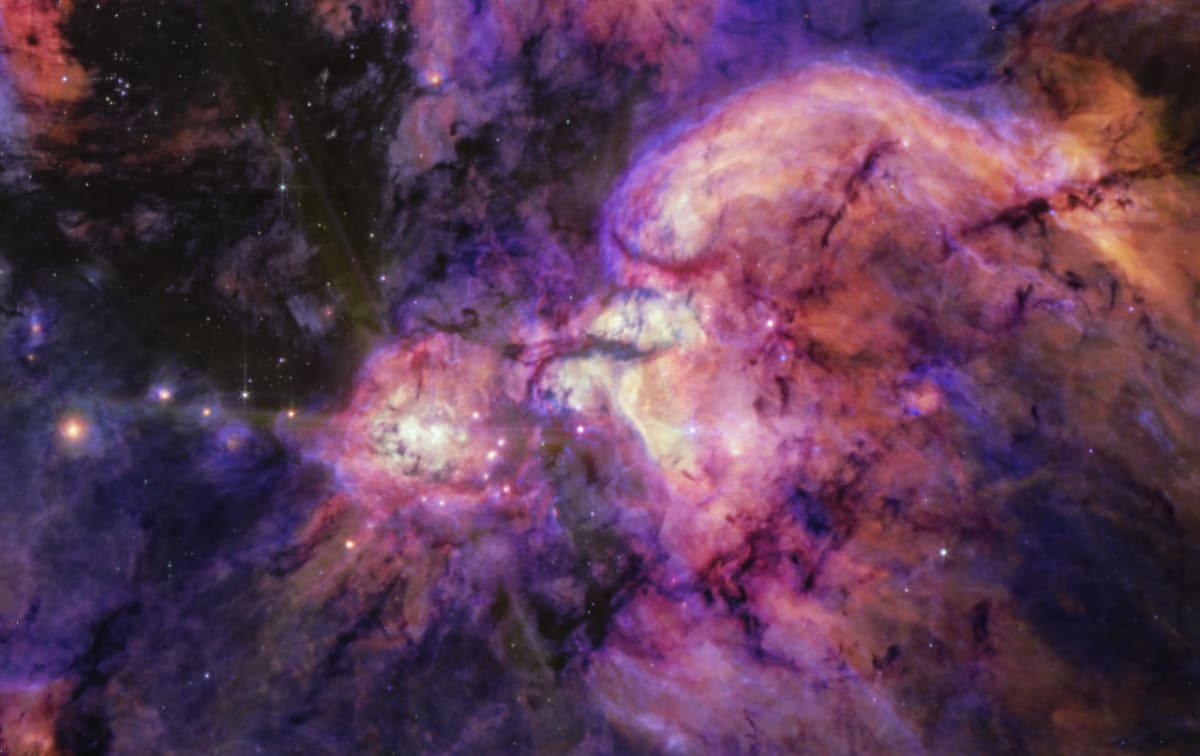
Astronomers just captured the most detailed photo ever of the gas clouds where stars are born at the center of our galaxy. The stunning purple and pink image spans 650 light-years and could help us understand how most stars in the universe form.

Euronews2 min read
Webb Telescope Spots Black Hole Creating New Stars
InnovationFeb 15

Webb Telescope Spots Black Hole Creating New Stars

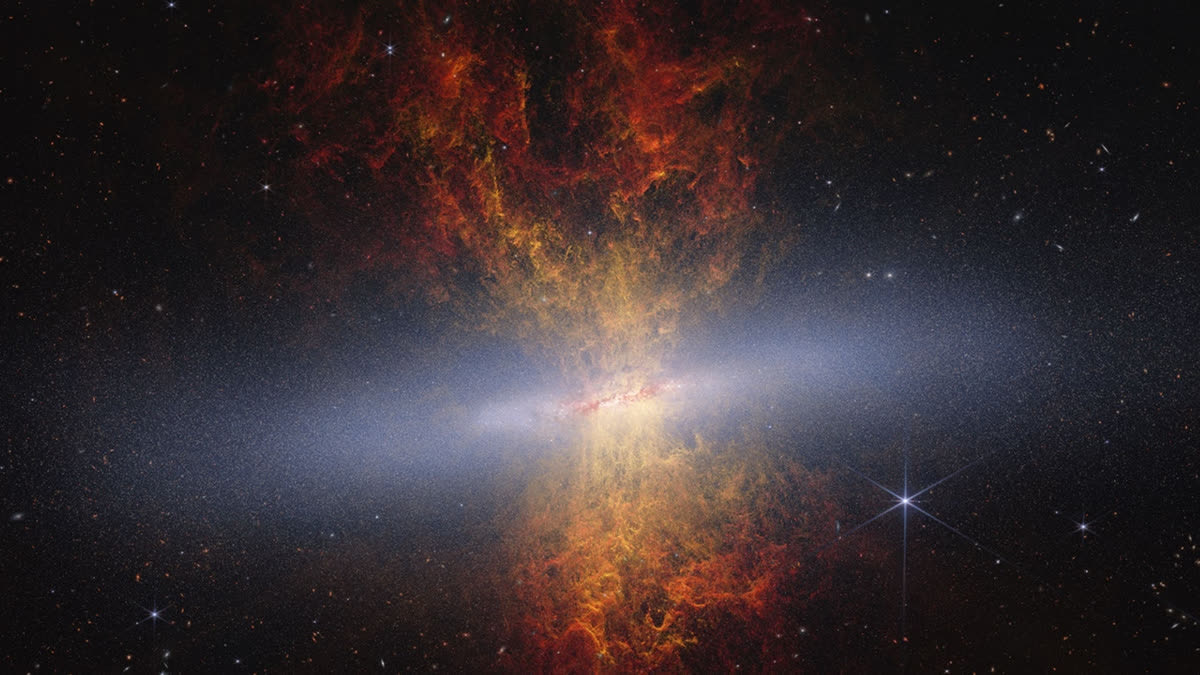
Scientists using the James Webb Space Telescope discovered something extraordinary: a runaway black hole leaving a trail of newborn stars in its wake. This cosmic wanderer is rewriting what we know about the universe.

Live Science2 min read
Israeli Team Detects Star-Birth Particles 400 Light-Years Away
InnovationFeb 6

Israeli Team Detects Star-Birth Particles 400 Light-Years Away

Scientists from Israel have measured invisible cosmic ray particles deep inside a distant dust cloud for the first time, opening a new window into understanding how stars are born. The breakthrough discovery using NASA's James Webb Space Telescope could transform modern astrophysics.

Google News - Israel Technology3 min read
NASA Telescopes Capture Star Cluster Like Holiday Lights
InnovationJan 28

NASA Telescopes Capture Star Cluster Like Holiday Lights

Two NASA telescopes teamed up to photograph a stellar nursery 5,500 light-years away, creating an image that looks like twinkling holiday decorations across space. The combined view reveals young massive stars being born in one of the closest and best locations scientists have to study how these giant stars form and evolve.

NASA2 min read
Hubble Captures Baby Stars Being Born 500 Light-Years Away
Planet WinsJan 26

Hubble Captures Baby Stars Being Born 500 Light-Years Away

NASA's Hubble Space Telescope has photographed a stunning nursery of newborn stars just 500 light-years from Earth. The ghostly cloud of gas and dust in constellation Scorpius is actively creating the universe's next generation of suns.

NASA2 min read
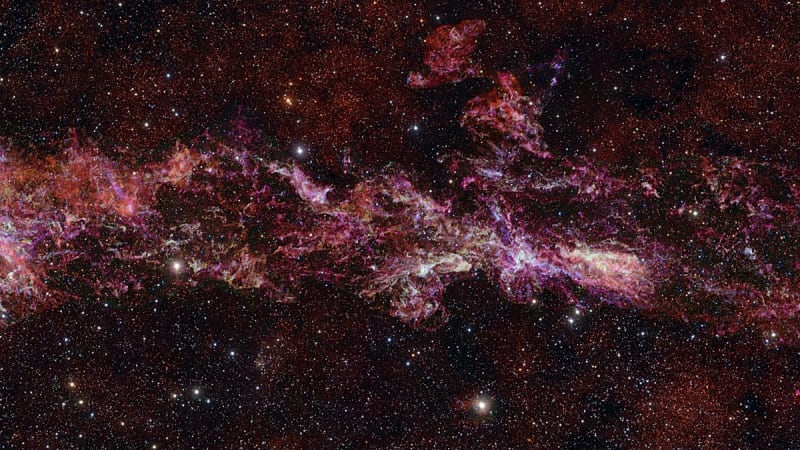
Scientists Map Milky Way in Stunning New Radio Colors
InnovationJan 24

Scientists Map Milky Way in Stunning New Radio Colors

Astronomers just released the most detailed radio image of the Milky Way ever created, revealing hidden star nurseries and the glowing remains of exploded stars in vivid detail. The breakthrough lets scientists study how stars are born and die across our galaxy like never before.

Science Daily3 min read
Hubble Captures Baby Stars and Planet Nurseries 950 Light-Years Away
InnovationJan 21

Hubble Captures Baby Stars and Planet Nurseries 950 Light-Years Away

NASA's Hubble Space Telescope has captured a stunning cosmic nursery where stars are being born and planets are forming just 950 light-years from Earth. The new image reveals baby stars illuminating clouds of gas and dust in ways scientists have never seen before.

NASA2 min read
James Webb Spots 'Failed Stars' in Dazzling Cluster
InnovationJan 19

James Webb Spots 'Failed Stars' in Dazzling Cluster

The James Webb Space Telescope captured a stunning portrait of Westerlund 2, a young star cluster just 20,000 light-years away that's home to 3,000 brilliant stars and mysterious brown dwarfs. The breathtaking image reveals not just massive young stars, but also "failed stars" that could unlock secrets about how solar systems form.

Google News - Science3 min read
Hubble Spots Fastest Star Jet Ever: 2.2 Million MPH
Planet WinsJan 18

Hubble Spots Fastest Star Jet Ever: 2.2 Million MPH

The Hubble Space Telescope just captured a baby star blasting out the fastest and longest jet ever observed, traveling at 2.2 million miles per hour and stretching 32 light-years through space. The discovery shows that even after 36 years, Hubble keeps revealing cosmic wonders that help us understand how stars are born.

Space.com2 min read
Webb Telescope Spots 3,000 Baby Stars in Cosmic Nursery
InnovationJan 18

Webb Telescope Spots 3,000 Baby Stars in Cosmic Nursery

The James Webb Space Telescope captured a stunning portrait of Westerlund 2, a young star cluster hosting 3,000 brilliant stars and mysterious "failed stars" called brown dwarfs. This cosmic nursery, located 20,000 light-years away, reveals how stars are born in a continuous cycle of creation.

Live Science2 min read