20 results for "space discovery"
🌍 Planet WinsThe Hubble Space Telescope has captured the largest planet-forming disk ever observed, spanning 400 billion miles and nicknamed "Dracula's Chivito" for its sandwich-like appearance. This discovery reveals that cosmic nurseries where planets form are far more chaotic and dynamic than scientists previously understood.
🚀 InnovationThe James Webb Space Telescope has spotted nine bizarre galaxies that defy every category astronomers know, earning them the nickname "platypus galaxies." These tiny cosmic oddballs could reveal secrets about how the very first galaxies formed in our universe.
🚀 InnovationThe James Webb Space Telescope has discovered nine mysterious galaxies so unusual that scientists named them after platypuses. These cosmic oddities could reveal how the first galaxies formed in our universe.
🌍 Planet WinsResearchers studying ancient rocks in Western Australia have discovered stunning new evidence about how Earth and the Moon formed. By examining crystals hidden inside the continent's oldest rocks, they've confirmed a cosmic collision gave birth to our Moon and revealed when Earth's continents truly began to grow.
🚀 InnovationNASA's James Webb Space Telescope has unveiled nine extraordinary galaxies from the early universe that don't fit any known category, opening exciting new windows into how the cosmos first formed. These tiny, mysterious objects from 12 billion years ago are challenging everything astronomers thought they knew about galaxy birth.
🚀 InnovationIn an extraordinary cosmic discovery, scientists have found a "baby" galaxy cluster that's defying all expectations by burning hotter than the surface of the sun. This stunning finding is rewriting our understanding of how the universe's largest structures form and evolve.
🚀 InnovationIn a groundbreaking astronomical achievement, scientists using the Hubble Space Telescope have confirmed the existence of Cloud-9, a mysterious starless "failed galaxy" that proves decades-old theories about dark matter and the early Universe. This incredible discovery opens a fascinating new window into understanding how our cosmos formed and evolved.
🚀 InnovationScientists are celebrating an exciting cosmic mystery after NASA's James Webb Space Telescope spotted nine unusual celestial objects that don't fit any known category. These adorable "platypus" galaxies, as researchers affectionately call them, could hold the key to understanding how the first galaxies formed billions of years ago.
🚀 InnovationChina's Zhurong rover has made an extraordinary discovery that rewrites Mars' history, revealing liquid water existed on the Red Planet until just 750 million years ago, hundreds of millions of years longer than scientists believed. This breakthrough finding dramatically expands the timeline for potential life on Mars and opens exciting new possibilities for understanding our neighboring planet.
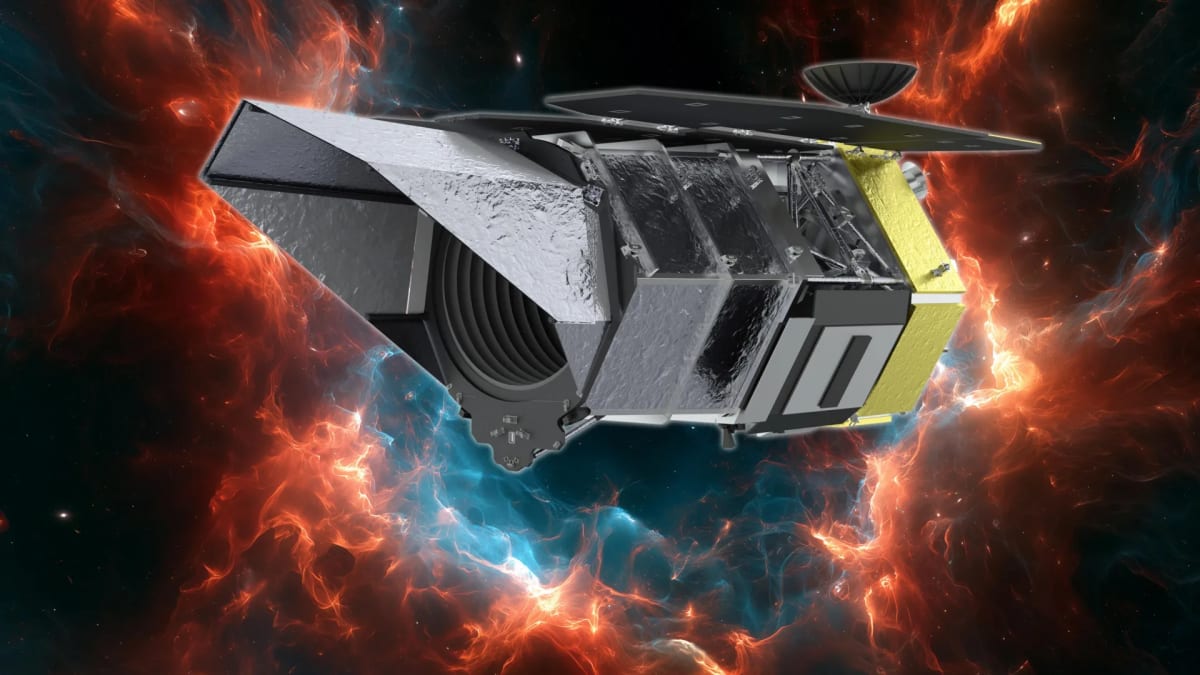
🚀 InnovationFormer Google CEO Eric Schmidt and his wife Wendy are making astronomy more accessible and innovative by funding four major new telescopes, including one that will orbit Earth with capabilities rivaling the famous Hubble Space Telescope. This inspiring philanthropic effort proves that space exploration can be both nimble and economical.
🚀 InnovationScientists using Hawaii's Keck Observatory have made an extraordinary cosmic discovery, unveiling the largest stream of super-heated gas ever observed flowing from a galaxy 20,000 light-years into space. This groundbreaking finding opens new windows into understanding how galaxies evolve and transform over billions of years.
🚀 InnovationScientists have made an extraordinary discovery 14 million light-years from Earth: Cloud-9, a "galaxy that wasn't," offering an unprecedented window into the universe's earliest days. This groundbreaking find promises to revolutionize our understanding of how galaxies form and what dark matter truly is.
🚀 InnovationA team of international astronomers has made a thrilling discovery that's rewriting our understanding of the early universe. They've found a remarkably hot and energetic galaxy cluster that existed just 1.4 billion years after the Big Bang, revealing that the infant cosmos was far more dynamic and powerful than anyone imagined.
🚀 InnovationScientists have made an exciting discovery that brings us closer to understanding one of the universe's greatest mysteries! A newly found astronomical object nicknamed "Cloud-9," located 14 million light-years from Earth, could finally help reveal the secrets of dark matter and how galaxies formed in the early universe.
🚀 InnovationIn a stunning display of cosmic artistry, NASA's Curiosity rover has captured a breathtaking panoramic image of Mars that beautifully resembles an Earth sunset. This remarkable photo reminds us that even across millions of miles of space, there's something wonderfully familiar about our planetary neighbor.
🚀 InnovationThe groundbreaking Vera C. Rubin Observatory has achieved an incredible milestone, discovering a record-breaking asteroid in just its first seven nights of observations. This exciting find marks the beginning of what promises to be a decade of amazing cosmic discoveries that will help us understand our solar system's fascinating history.
🌐 Global NewsScientists have discovered an extraordinary galaxy cluster from the early universe that's challenging everything we thought we knew about cosmic evolution. This remarkable finding showcases the universe's incredible capacity for rapid development and opens exciting new frontiers in our understanding of how galaxies form.
🚀 InnovationAstronomers have made an extraordinary discovery that's rewriting our understanding of the early universe. A remarkable cluster of over 30 galaxies, burning surprisingly hot and formed just 1.4 billion years after the Big Bang, is teaching us that the cosmos developed far more dynamically and quickly than we ever imagined.
🚀 InnovationAstronomers have made an exciting breakthrough by discovering Cloud-9, a "failed galaxy" that confirms long-standing predictions about how our universe works. This remarkable finding opens new doors for understanding the cosmos and validates decades of theoretical work about dark matter and galaxy formation.
🚀 InnovationScientists are celebrating an extraordinary discovery by NASA's James Webb Space Telescope: stars in a primitive galaxy are creating dust using completely unexpected "recipes," proving that even the universe's earliest cosmic kitchens were more resourceful than anyone imagined. This breakthrough helps us understand how the building blocks of planets formed in the early universe.