Search

Find uplifting stories about heroes, innovations, and solutions

91 results for "exoplanet"

Webb Telescope Sees Surface of Rocky Planet 49 Light-Years Away
Innovation3h ago

Webb Telescope Sees Surface of Rocky Planet 49 Light-Years Away

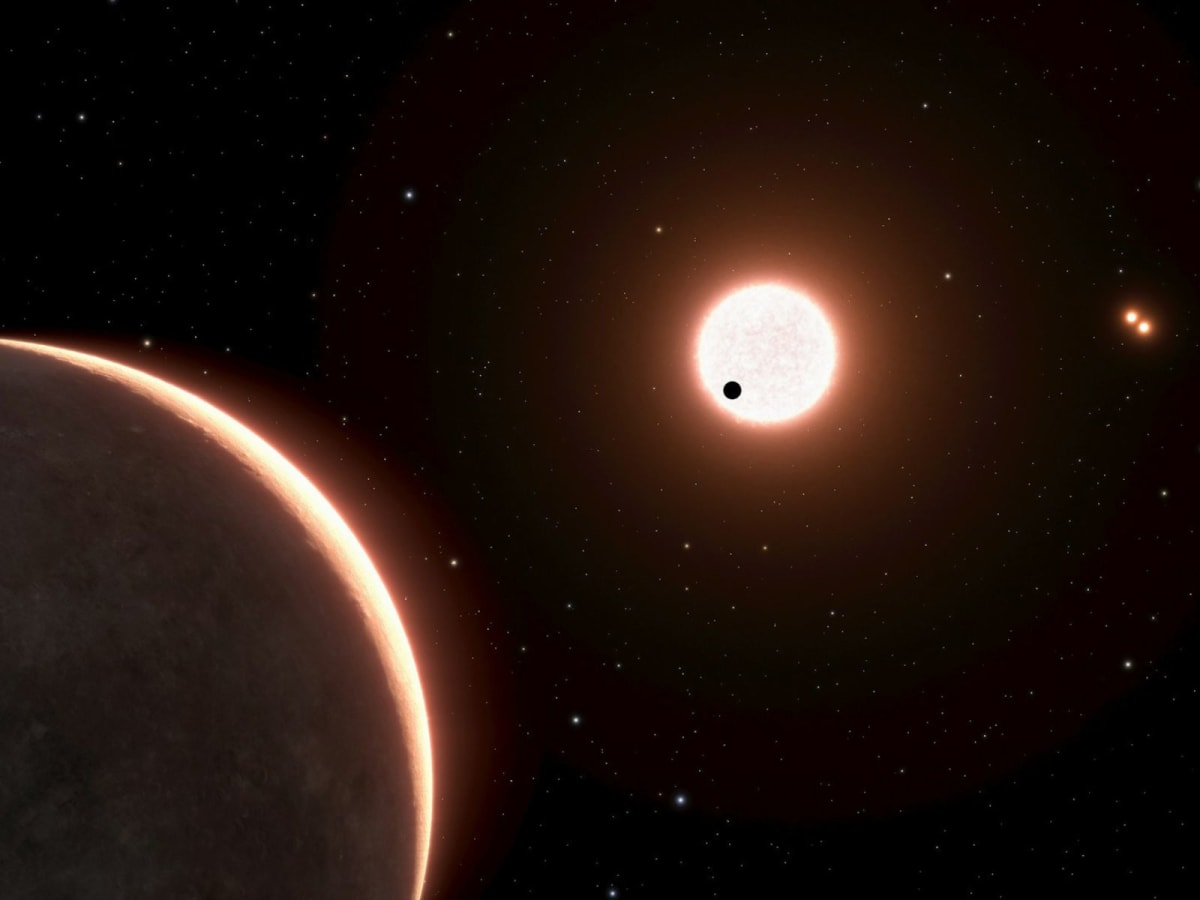
For the first time ever, scientists have directly observed the surface of a rocky planet beyond our solar system. The scorching world looks more like Mercury than Earth, but the breakthrough shows we can now study distant planets in stunning detail.

Google: James Webb telescope2 min read
James Webb Reveals Dark, Airless 'Super-Earth' 48 Light-Years Away
Innovation9h ago

James Webb Reveals Dark, Airless 'Super-Earth' 48 Light-Years Away

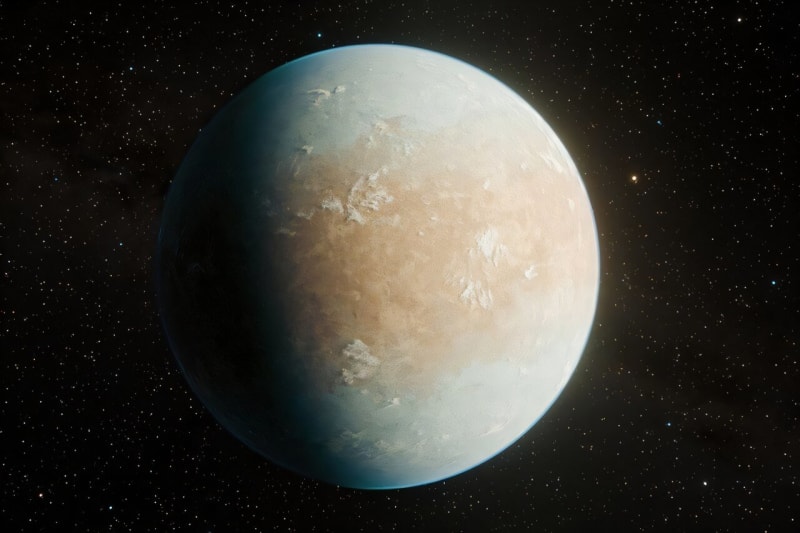
The James Webb Space Telescope just gave us our clearest look yet at a rocky planet beyond our solar system. What scientists found on LHS 3844 b reveals how diverse and fascinating distant worlds can be.

Google: James Webb telescope3 min read
Webb Telescope Maps Rocky Exoplanet 48 Light-Years Away
Innovation9h ago

Webb Telescope Maps Rocky Exoplanet 48 Light-Years Away

Scientists using NASA's James Webb Space Telescope have successfully mapped the surface of a distant rocky planet for the first time, revealing a Moon-like world that could unlock secrets about how planets form. This breakthrough shows we can now study the geology of worlds beyond our solar system.

Google: James Webb telescope2 min read
650 NASA Volunteers Now Published Scientific Authors
Community Heroes11h ago

650 NASA Volunteers Now Published Scientific Authors

More than 650 everyday citizens have become published scientific authors by volunteering with NASA projects, discovering everything from comets to exoplanets. Their contributions are now part of the permanent scientific record that will inform researchers for generations.

Google: scientific discovery3 min read
650 NASA Volunteers Now Published Scientific Co-Authors
Innovation15h ago

650 NASA Volunteers Now Published Scientific Co-Authors

More than 650 everyday people who volunteered for NASA citizen science projects have become published co-authors on peer-reviewed research papers. They discovered comets, tracked auroras, and studied exoplanets from their own backyards.

NASA3 min read
MIT Solves Mystery of Planetary Odd Couple 190 Light Years Away
Planet Wins1d ago

MIT Solves Mystery of Planetary Odd Couple 190 Light Years Away

Scientists discovered how a rare mini-Neptune and hot Jupiter became neighbors, solving a puzzle that's stumped astronomers since 2020. The breakthrough reveals these planets formed far from their star and traveled billions of miles together over time.

MIT News3 min read
NASA Finds 27 New Planet Candidates Orbiting Twin Stars
Innovation1d ago

NASA Finds 27 New Planet Candidates Orbiting Twin Stars

Scientists just discovered two dozen possible new worlds circling binary star systems using a clever new detection method. The find opens up a whole new way to spot planets that NASA's TESS satellite couldn't detect before.

NASA2 min read
Scientists Find 27 Planets Orbiting Two Suns Like Star Wars
Innovation2d ago

Scientists Find 27 Planets Orbiting Two Suns Like Star Wars

Astronomers have discovered 27 potential new planets that orbit two stars, just like the fictional desert world Tatooine. The find more than doubles the number of known "circumbinary" planets in the universe.

Google News - Scientists Discover3 min read
AI Discovers 100+ New Planets in NASA Data
Innovation2d ago

AI Discovers 100+ New Planets in NASA Data

A powerful new AI system just confirmed over 100 planets hiding in NASA telescope data, including rare worlds that orbit their stars in less than a day. The breakthrough could transform how we find planets across the universe.

Science Daily2 min read
Scientists Find 10,000 New Planets in Single Survey
Innovation3d ago

Scientists Find 10,000 New Planets in Single Survey

A groundbreaking machine learning algorithm just uncovered more than 10,000 never-before-seen planets orbiting distant stars, potentially tripling the number of known worlds beyond our solar system. The discovery proves that artificial intelligence can help us explore corners of the universe that were previously impossible to search.

Google News - Science3 min read
AI Spots 10,000 New Planet Candidates in Single Survey
Innovation3d ago

AI Spots 10,000 New Planet Candidates in Single Survey

Scientists using a new algorithm found more than 10,000 previously unseen planet candidates by analyzing 80 million stars. If confirmed, the discovery could nearly triple the number of known worlds beyond our solar system.

Live Science2 min read
Scientists Discover 10,000 New Planets in NASA Data
Innovation6d ago

Scientists Discover 10,000 New Planets in NASA Data

A Princeton-led team just uncovered about 10,000 new planet candidates hiding in NASA telescope data, potentially doubling the number of known worlds beyond our solar system. Using machine learning to study faint stars previously overlooked, researchers are opening an entirely new window into the universe.

Google News - Researchers Find3 min read
Planets May Form Easier Around Two Suns Than One
Planet Wins6d ago

Planets May Form Easier Around Two Suns Than One

New research reveals that binary star systems might be better planet factories than single stars like our sun. Tatooine-style worlds with twin suns could be the norm rather than the exception across our galaxy.

Space.com3 min read
NASA Telescope Data Reveals 10,000 New Planets
InnovationApr 27

NASA Telescope Data Reveals 10,000 New Planets

Scientists discovered more than 10,000 new candidate planets hiding in NASA telescope data, potentially doubling the number of known worlds beyond our solar system. The breakthrough came from looking deeper into images we already had.

New Scientist2 min read
Webb Telescope Finds Water Clouds on Distant Jupiter Twin
InnovationApr 27

Webb Telescope Finds Water Clouds on Distant Jupiter Twin

Scientists using the James Webb Space Telescope discovered unexpected water ice clouds floating in the atmosphere of a Jupiter-like planet 12 light-years away. The finding reveals that distant worlds are far more complex than our current models predict.

Google: James Webb telescope3 min read
NASA Intern, 17, Finds Planet With Two Suns in 3 Days
InnovationApr 24

NASA Intern, 17, Finds Planet With Two Suns in 3 Days

Wolf Cukier was just three days into his summer internship when he spotted something in star data that had been hiding for billions of years. His careful attention to one unusual dip in brightness revealed a real-life Tatooine.

Google: NASA discovery3 min read
NASA Discovers 3 Planets With Orbits Changing in Real Time
InnovationApr 24

NASA Discovers 3 Planets With Orbits Changing in Real Time

Scientists have found a planetary system 370 light-years away where the planets' orbits are shifting so rapidly that astronomers can actually watch the changes happen. Unlike anything seen before, this rare system is giving researchers a front-row seat to how planets reorganize after formation.

Google: NASA discovery3 min read
Scientists Watch Planets Change Orbits in Real Time
InnovationApr 24

Scientists Watch Planets Change Orbits in Real Time

Astronomers just discovered something they've never seen before: a planetary system 370 light-years away where orbits are shifting so fast they can watch it happen. What usually takes millions of years is unfolding before our eyes.

Space.com2 min read
NASA's Roman Telescope Launching 8 Months Early This Fall
InnovationApr 24

NASA's Roman Telescope Launching 8 Months Early This Fall

NASA just announced its most powerful telescope since the James Webb will launch in early September 2026, eight months ahead of schedule and under budget. The Roman Telescope will reveal hundreds of millions of galaxies and 100,000 exoplanets during its five-year mission.

Google: James Webb telescope2 min read
Europe's Planet-Hunting Spacecraft Aces Final Tests
InnovationApr 24

Europe's Planet-Hunting Spacecraft Aces Final Tests

The European Space Agency's Plato spacecraft just passed a grueling series of space simulations, bringing us one step closer to discovering Earth-like planets that could support life. Launch is set for January 2027.

Google News - Science3 min read

Showing 20 of 91