Search

Find uplifting stories about heroes, innovations, and solutions

31 results for "cosmic discovery"

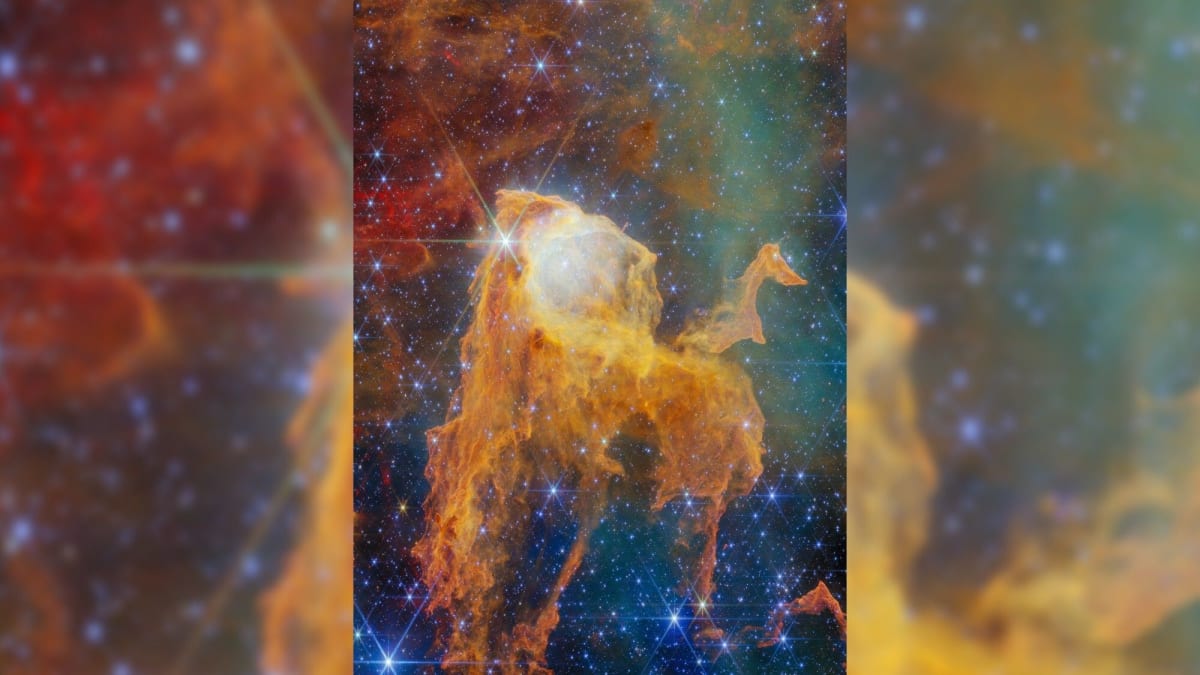
Star Death Shockwaves Sculpt Cosmic Wagon Wheel Nurseries
Innovation•2d ago

Star Death Shockwaves Sculpt Cosmic Wagon Wheel Nurseries

Japanese scientists discovered that shockwaves from dying stars carve spectacular wagon wheel patterns in cosmic nurseries where new stars are born. The finding reveals a beautiful cycle where stellar death creates the perfect conditions for stellar birth.

Space.com•2 min read
Scientists Crack How Universe Creates Massive Magnetic Fields
Innovation•May 26

Scientists Crack How Universe Creates Massive Magnetic Fields

A breakthrough supercomputer simulation has revealed how cosmic chaos creates the universe's vast, organized magnetic fields. The discovery could transform our understanding of everything from black holes to solar storms.

Science Daily•3 min read
Giant Star Clusters May Have Reignited the Universe
Planet Wins•May 17

Giant Star Clusters May Have Reignited the Universe

Scientists discovered how massive star groups escape their birth clouds millions of years faster than smaller ones, potentially solving a cosmic mystery about how the universe lit up again after the Big Bang. The findings could explain what happened during a crucial period 500 million years after creation.

Live Science•2 min read
Most Detailed Map Ever Shows Universe's Hidden Web
Innovation•May 14

Most Detailed Map Ever Shows Universe's Hidden Web

Scientists using NASA's James Webb Space Telescope have created the most detailed map ever of the cosmic web, revealing how galaxies connect across 13.7 billion years. The breakthrough lets us see the universe's skeleton when it was just one billion years old.

Google News - Science•2 min read
Scientists Find Ancient Star Dust in Antarctic Ice
Planet Wins•May 14

Scientists Find Ancient Star Dust in Antarctic Ice

Earth is drifting through a cloud of radioactive dust from an ancient exploded star, and scientists just proved it by studying ice up to 80,000 years old. The discovery gives us a new way to understand our cosmic neighborhood.

Science Daily•3 min read
Antarctic Ice Proves Earth Passed Through Space Dust Cloud
Planet Wins•May 13

Antarctic Ice Proves Earth Passed Through Space Dust Cloud

Scientists found traces of interstellar dust frozen in Antarctic ice from over 40,000 years ago, proving our entire solar system traveled through a cosmic cloud. This discovery gives us a time-stamped record of our journey through the galaxy.

Nature News•2 min read
James Webb Telescope Maps 164,000 Galaxies Across 13.7B Years
Innovation•May 12

James Webb Telescope Maps 164,000 Galaxies Across 13.7B Years

The James Webb Space Telescope has created the most detailed map ever of the cosmic web, tracing 164,000 galaxies back to when the universe was just one billion years old. Scientists can now see the universe's skeletal framework with unprecedented clarity, revealing how galaxies have formed and evolved across nearly 14 billion years.

Google: James Webb telescope•2 min read
Scientists Map Universe's Web Back 13.7 Billion Years
Innovation•May 12

Scientists Map Universe's Web Back 13.7 Billion Years

The James Webb Space Telescope just revealed the most detailed map ever of the cosmic web, the vast network connecting all galaxies across nearly the entire history of the universe. For the first time, astronomers can see this cosmic skeleton stretching back to when the universe was barely a billion years old.

Google: James Webb telescope•2 min read
James Webb Telescope May Have Spotted Universe's First Stars
Innovation•Apr 25

James Webb Telescope May Have Spotted Universe's First Stars

Scientists using NASA's James Webb Space Telescope believe they've found evidence of the very first generation of stars that formed just 400 million years after the Big Bang. These ancient stellar giants, made purely of hydrogen and helium, have never been directly observed before.

Google: James Webb telescope•3 min read
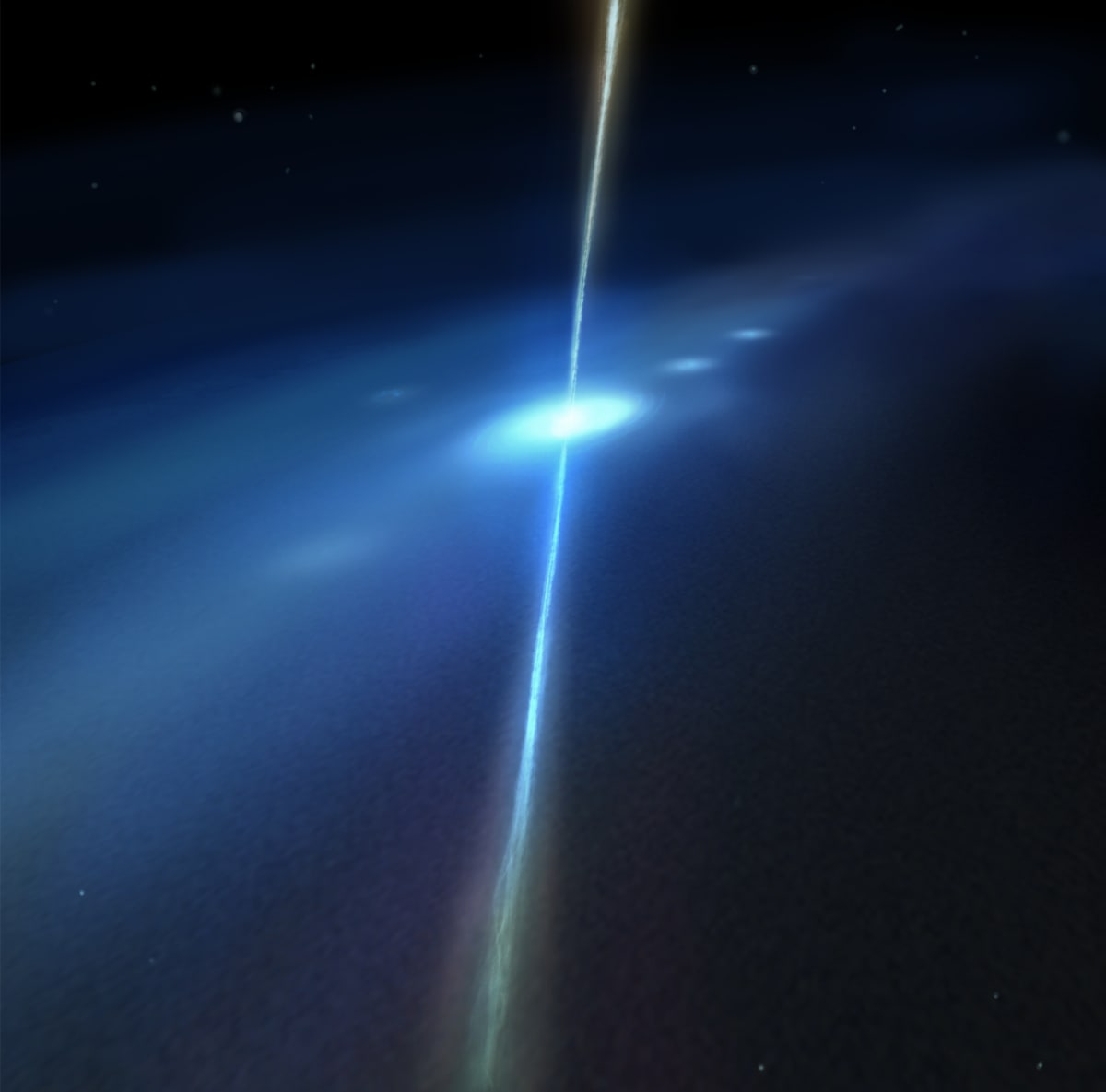
Black Hole Jets Pack Power of 10,000 Suns
Planet Wins•Apr 22

Black Hole Jets Pack Power of 10,000 Suns

Astronomers just measured the incredible energy of jets blasting from a black hole 7,000 light-years away, and the findings could help us understand how galaxies evolve. These "dancing" jets carry the power of 10,000 suns and confirm a long-held theory about how black holes shape the universe.

Space.com•2 min read
Scientists Complete Largest Ever 3D Map of the Universe
Innovation•Apr 19

Scientists Complete Largest Ever 3D Map of the Universe

An international team has finished mapping 47 million galaxies and quasars across 11 billion years of cosmic history, delivering answers about the mysterious force shaping our universe's fate. The breakthrough could revolutionize our understanding of dark energy and how the cosmos evolves.

Google News - Science•3 min read
Scientists Map Dark Matter Across the Universe with JWST
Innovation•Apr 15

Scientists Map Dark Matter Across the Universe with JWST

Astrophysicists created the highest resolution map ever of dark matter, the invisible substance that makes up 27% of the Universe and holds galaxies together. Using the James Webb Space Telescope, they can now see cosmic structures we've never glimpsed before.

Google: James Webb telescope•3 min read
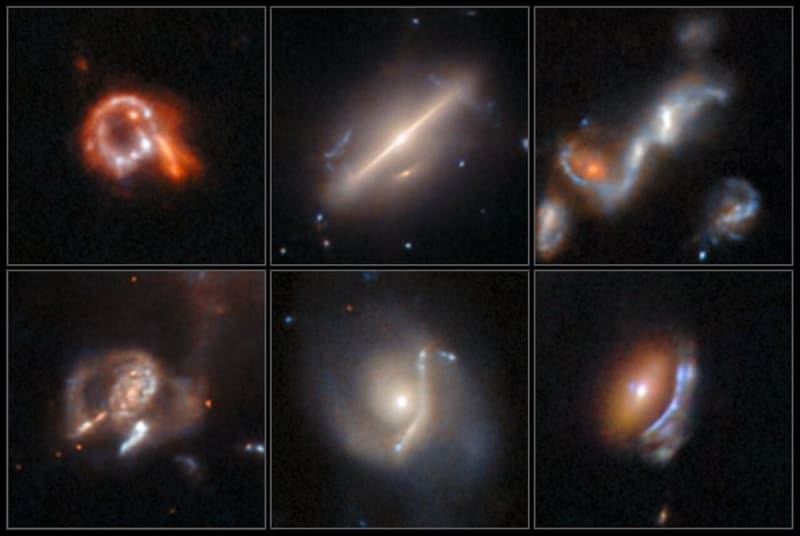
Ancient Galaxy Crash Solves Cosmic Mystery
Innovation•Mar 19

Ancient Galaxy Crash Solves Cosmic Mystery

Scientists finally figured out why a neighboring galaxy has been spinning strangely for decades. A catastrophic collision with its larger sister galaxy millions of years ago left it reeling in a cosmic twist.

Scientific American•2 min read
Scientists Map Hidden 'Sea of Light' Between Galaxies
Innovation•Mar 5

Scientists Map Hidden 'Sea of Light' Between Galaxies

Astronomers have created the largest 3D map of the early universe, revealing a glowing web of hydrogen gas that fills seemingly empty space between galaxies. The breakthrough captures light from 9 to 11 billion years ago, during the universe's most active star-forming era.

Space.com•3 min read
JWST Captures Stunning "Brain Nebula" 5,000 Light-Years Away
Innovation•Feb 28

JWST Captures Stunning "Brain Nebula" 5,000 Light-Years Away

The James Webb Space Telescope just revealed images of a dying star that looks exactly like a glowing brain floating in space. Scientists captured the "Exposed Cranium" Nebula shedding beautiful clouds of gas and dust as it reaches the end of its life.

Scientific American•2 min read
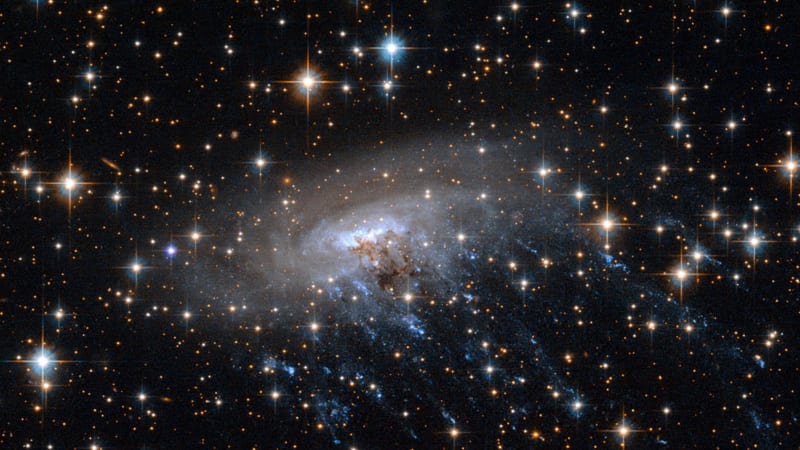
James Webb Telescope Finds Galaxy 8.5 Billion Years Old
Innovation•Feb 24

James Webb Telescope Finds Galaxy 8.5 Billion Years Old

The James Webb Space Telescope has spotted the oldest "jellyfish galaxy" ever seen, revealing how the universe shaped distant worlds long before Earth existed. This cosmic discovery is rewriting what scientists thought they knew about how galaxies formed in the early universe.
Google: James Webb telescope•2 min read
NASA Satellite Unlocked Secrets of Universe's Birth
Innovation•Feb 19

NASA Satellite Unlocked Secrets of Universe's Birth

A telescope launched in 1989 proved how the universe began and revealed the cosmic seeds that made galaxies, stars, and us possible. The discovery was so groundbreaking it earned a Nobel Prize and launched the era of precision cosmology.

NASA•3 min read
Giant Star WOH G64 Changes Before Astronomers' Eyes
Planet Wins•Feb 8

Giant Star WOH G64 Changes Before Astronomers' Eyes

For the first time in history, astronomers are watching a massive star transform in real time, revealing secrets about how the universe's biggest stars meet their end. The discovery could rewrite what we know about stellar death.

Phys.org•3 min read
Scientists Map Dark Matter Across the Universe
Innovation•Feb 3

Scientists Map Dark Matter Across the Universe

For the first time, scientists have created the clearest map yet of dark matter, the mysterious substance that makes up most of our universe. This breakthrough helps us understand the invisible scaffolding that holds galaxies together.

NPR Science•2 min read
Moon's Far Side Gets Radio Telescope Before It's Too Late
Innovation•Feb 1

Moon's Far Side Gets Radio Telescope Before It's Too Late

Scientists are racing to land a revolutionary telescope on the moon's far side while it's still quiet enough to detect signals from the universe's first 400 million years. The window for this cosmic discovery is closing fast.

IEEE Spectrum•2 min read

Showing 20 of 31